
Protecting epoxy floors in Southwest Florida requires proactive maintenance against heat, moisture, and UV exposure. Regular cleaning with a pH-neutral cleaner prevents dirt abrasion. Applying a UV-stable polyaspartic topcoat, as used by SWFL Coating Solutions, shields against sun damage. Annual resealing maintains the barrier against humidity and storm-related moisture intrusion.
What Threats Can Damage Epoxy Floors in Southwest Florida?
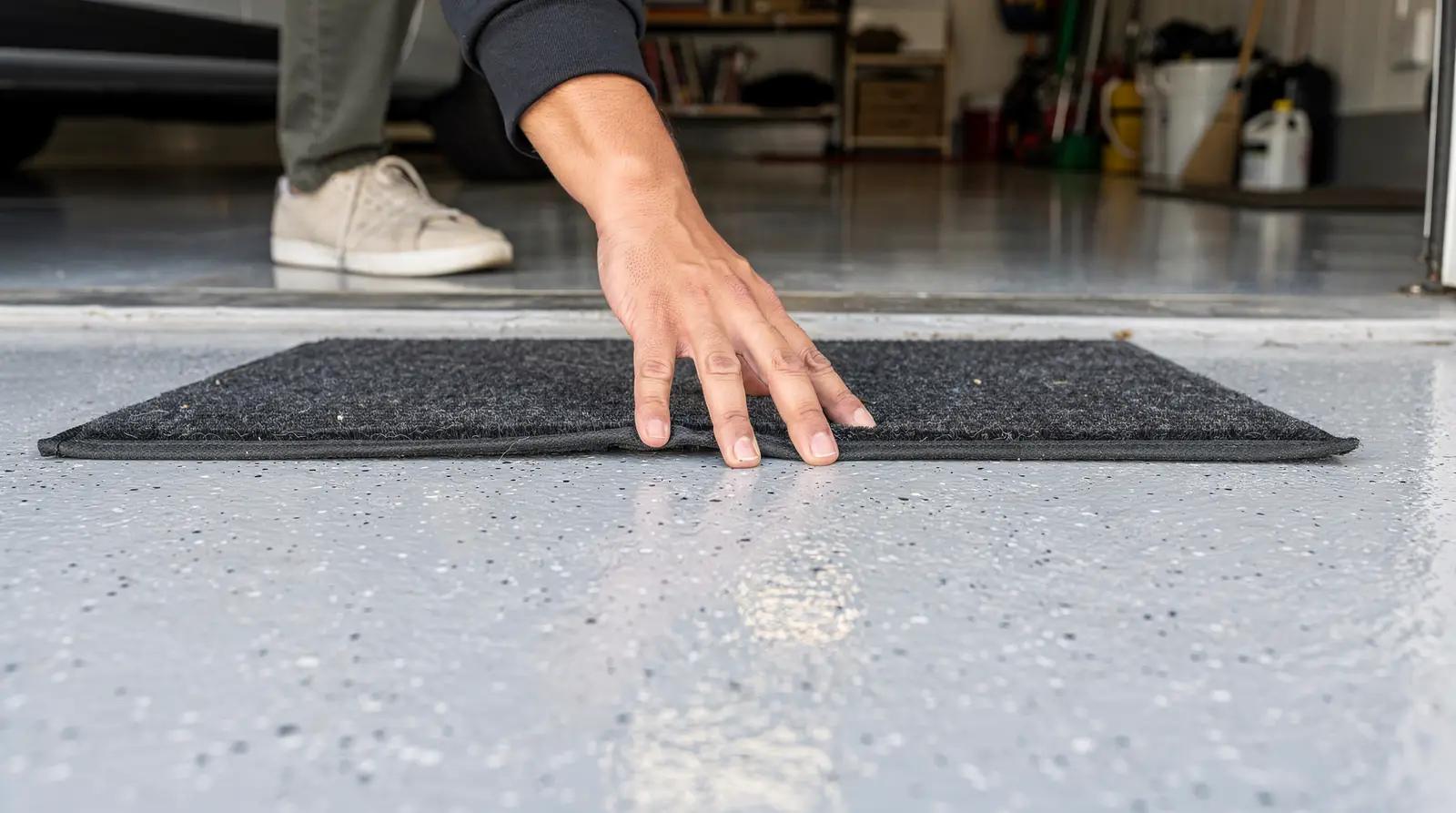
Southwest Florida's climate can expose coated concrete surfaces to strong sunlight, humidity, rain, and tracked-in sand. The amount of wear a floor experiences depends on its location, the coating system, and how the space is used.
Understanding these conditions can help property owners protect their floors and recognize when professional attention may be needed.
How Can Moisture Affect an Epoxy Floor?
Moisture can cause problems when it becomes trapped beneath a coating or moves through the concrete slab. Depending on the conditions, excessive moisture may contribute to bubbling, peeling, or a loss of adhesion.
Before a new floor coating is installed, assessing the concrete's condition and moisture levels can help determine whether additional preparation or a moisture-mitigation system is needed.
For an existing floor, look for changes such as blistering or areas where the coating appears to be lifting. If you notice these signs, have the surface assessed to determine the cause before deciding on a repair.
How Does Sun Exposure Affect Epoxy Coatings?
Some epoxy coatings can yellow, fade, or chalk when exposed to sunlight over time. This is especially relevant for outdoor areas and spaces where sunlight regularly reaches the floor, such as an open garage or lanai.
A UV-stable coating or topcoat may help reduce visible discoloration. The right option depends on the complete coating system and the amount of sun exposure the surface receives.
What Everyday Activities Wear Down Coated Floors?
Foot traffic, vehicle tires, dragged furniture, and abrasive debris can gradually affect a coated floor's finish. Sand and grit are particularly common in Southwest Florida and can act like sandpaper when repeatedly pressed against the surface.
Keeping the floor clean, using protective pads under furniture, and lifting heavy items rather than dragging them can help limit unnecessary wear.
How Do You Protect Epoxy Floors From Damage Daily?
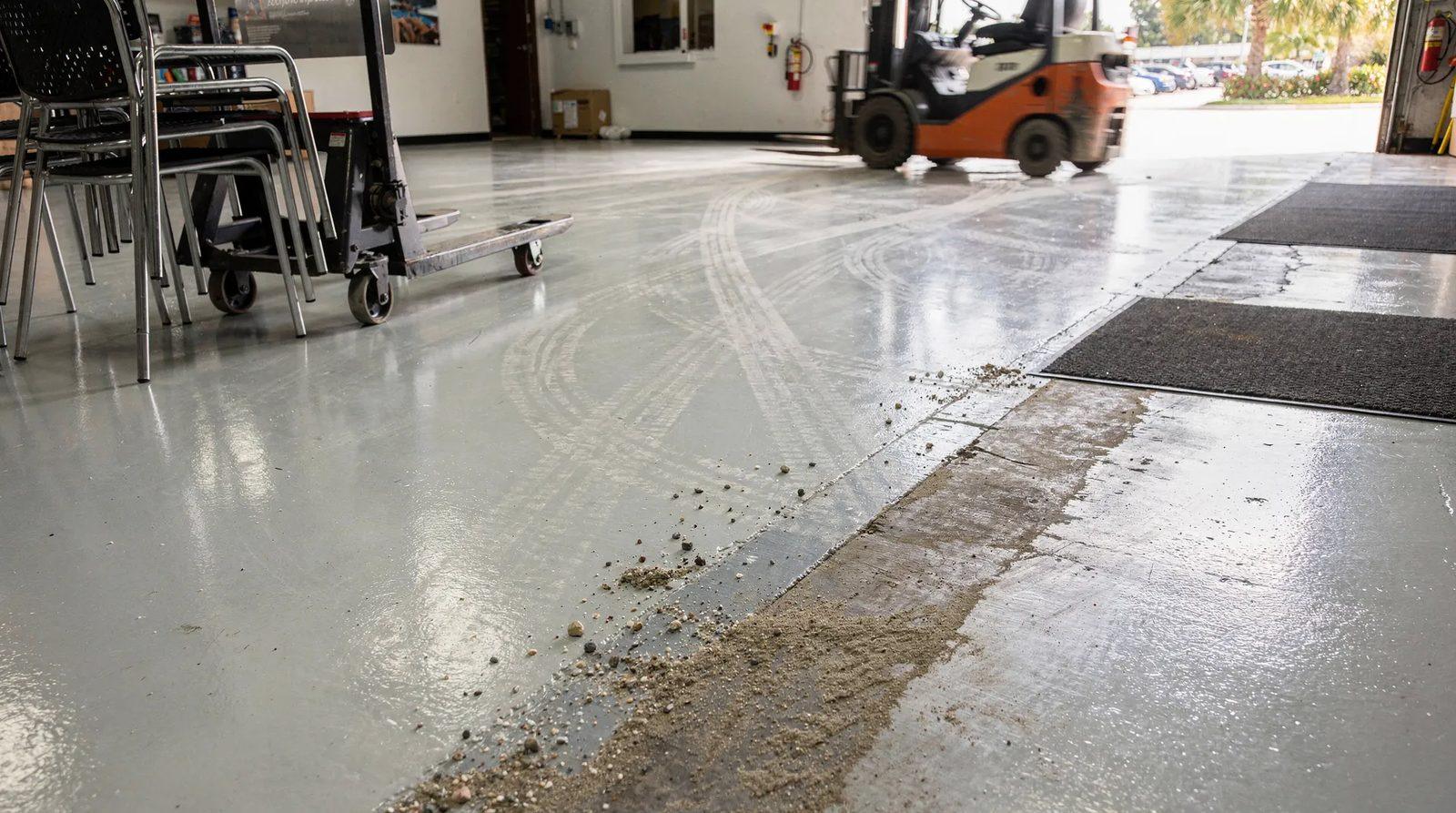
Protecting a coated floor doesn't require a complicated routine. Consistent cleaning and quick attention to spills can help preserve its appearance and reduce wear.
The best cleaning method may vary depending on the coating system, so follow the installer's or manufacturer's care instructions whenever possible.
What Cleaning Routine Works Best for Epoxy Floors?
Sweep or dust-mop regularly to remove sand, dirt, and other debris. A soft-bristle broom or microfiber dust mop can help collect grit without unnecessarily scratching the surface.
For routine cleaning, use a damp mop and a pH-neutral cleaner recommended for your coating. Avoid abrasive cleaning pads and check the manufacturer's instructions before using harsh chemicals, since cleaning products can affect finishes differently.
High-traffic spaces may need more frequent attention than areas that see occasional use.
How Should You Handle Spills?
Clean up spills promptly, especially oil, grease, automotive fluids, and other chemicals. Even when a coating is designed to resist stains, the effect of a spill can depend on the substance, the coating, and how long it remains on the floor.
Use a soft cloth or mop and an appropriate cleaner. For unfamiliar chemicals or stubborn stains, check the floor's care instructions or contact your installer before choosing a cleaning product.
How Can You Reduce Scratches and Surface Wear?
Small changes can make a difference in how a floor looks over time:
- Place mats at entrances to help catch sand and dirt.
- Use protective pads under furniture and equipment.
- Lift heavy objects instead of dragging them.
- Keep garage and commercial floors clear of abrasive debris.
- Inspect frequently used areas for signs of wear.
If you notice peeling, bubbling, or damage that continues to spread, contact a coating professional to assess the floor and recommend the next step.
When Should You Consider a Polyurea or Polyaspartic Coating?
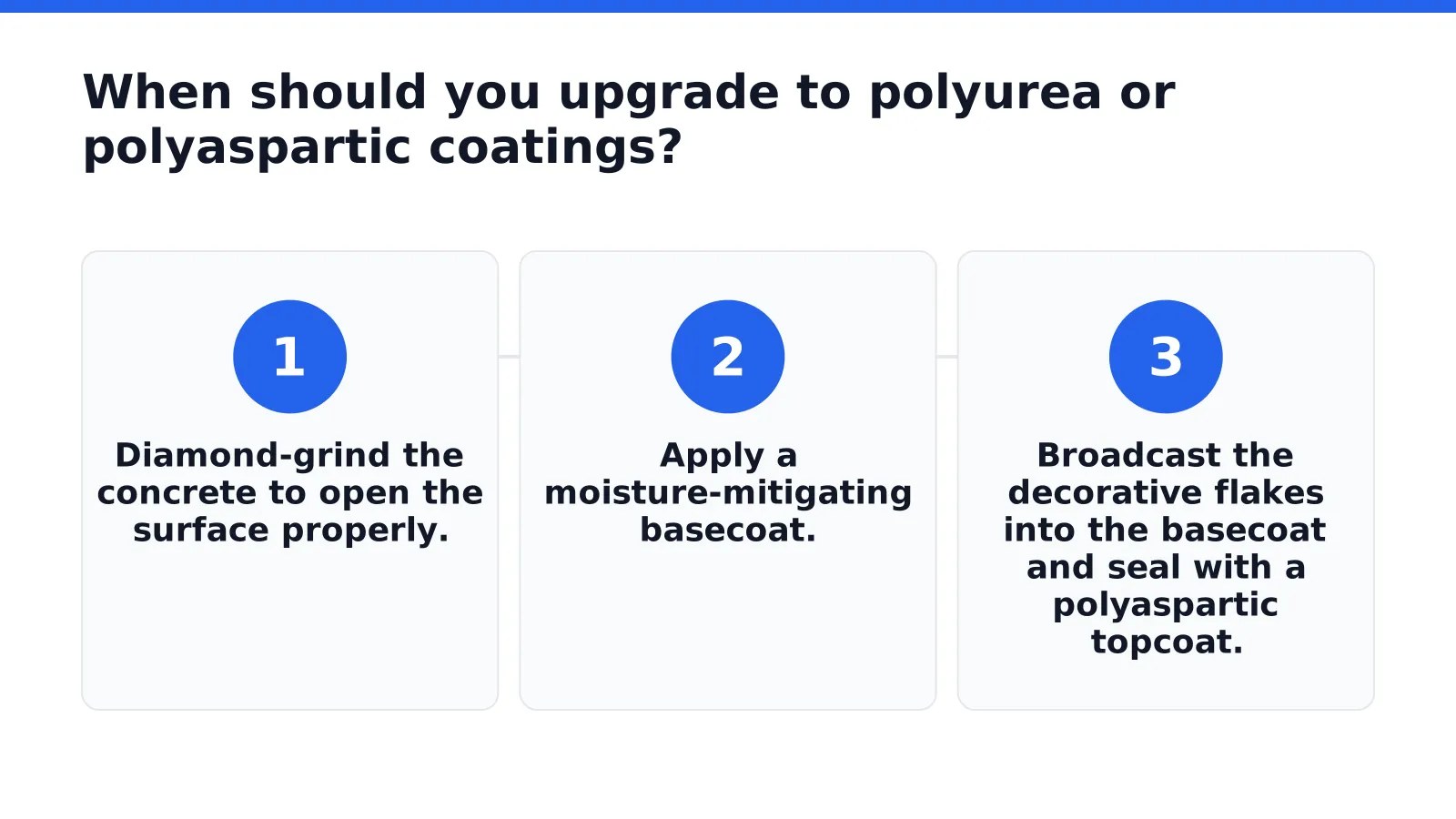
Epoxy is one option for concrete floors, but it isn't the only one. Depending on the project, a property owner may also want to ask about polyurea or polyaspartic coatings.
The best choice depends on the condition of the concrete, the location, the desired appearance, and how the surface will be used.
Why Consider a UV-Stable Coating for Outdoor Areas?
For surfaces exposed to direct sunlight, UV resistance can be an important consideration. Some polyaspartic coatings are designed to resist yellowing, making them an option worth discussing for sun-exposed concrete.
A coating professional can help determine whether a particular product is suitable for the surface and its conditions.
What Should You Ask About Before Choosing a Coating?
Before scheduling a project, discuss how the space will be used and what conditions the coating will need to handle. Useful questions include:
- Which coating system do you recommend for this surface and why?
- How will the concrete be prepared before installation?
- Does the slab need moisture testing or additional treatment?
- Is the coating suitable for the amount of sunlight and traffic the area receives?
- What cleaning and maintenance does the system require?
These questions can help you compare options and understand what to expect from your finished floor.
Can an Existing Epoxy Floor Be Recoated?
Some existing epoxy floors may be candidates for recoating, but that depends on their condition and compatibility with the new product. A floor with peeling, widespread damage, or an unresolved moisture problem may need additional attention first.
A professional assessment can help determine whether the floor needs preparation, repair, recoating, or a different approach.
Frequently Asked Questions
How often should I clean my epoxy floor?
Sweep or dust-mop regularly, especially in areas where sand and dirt are tracked in. High-traffic garages and commercial spaces may need more frequent cleaning. Use a damp mop and a cleaner recommended for your specific coating when a deeper clean is needed.
Can I pressure wash an epoxy-coated floor?
It depends on the coating and its condition. High pressure may damage a floor that is already peeling or has exposed edges. Check the installer's care instructions before pressure washing, and ask a professional if you're unsure.
What should I do if my epoxy floor starts peeling?
Avoid covering the peeling area with another coating before identifying the cause. Peeling can result from several issues, including moisture or adhesion problems. A coating professional can assess the surface and recommend an appropriate repair.
Will sunlight damage an epoxy garage floor?
Some epoxy coatings can yellow or discolor when regularly exposed to sunlight, including near an open garage door. A UV-stable coating or compatible topcoat may help reduce discoloration. Ask your installer which option is suitable for your floor.
Can I put a new coating over an existing epoxy floor?
Some epoxy floors can be recoated, but the existing coating must be compatible with the new product and in suitable condition. A professional can inspect the floor for damage, moisture concerns, and preparation needs before recommending the next step.
Protect Your Epoxy Floor With SWFL Coating Solutions
Regular cleaning and attention to spills, sunlight, and signs of wear can help keep your epoxy floor looking its best. If you notice peeling, bubbling, or discoloration, having the floor assessed can help you understand what's causing the problem.
Whether you have questions about caring for an existing epoxy floor or are considering a new epoxy coating, SWFL Coating Solutions can help you explore options for your space.
Contact SWFL Coating Solutions to learn more or get in touch about your epoxy flooring project!